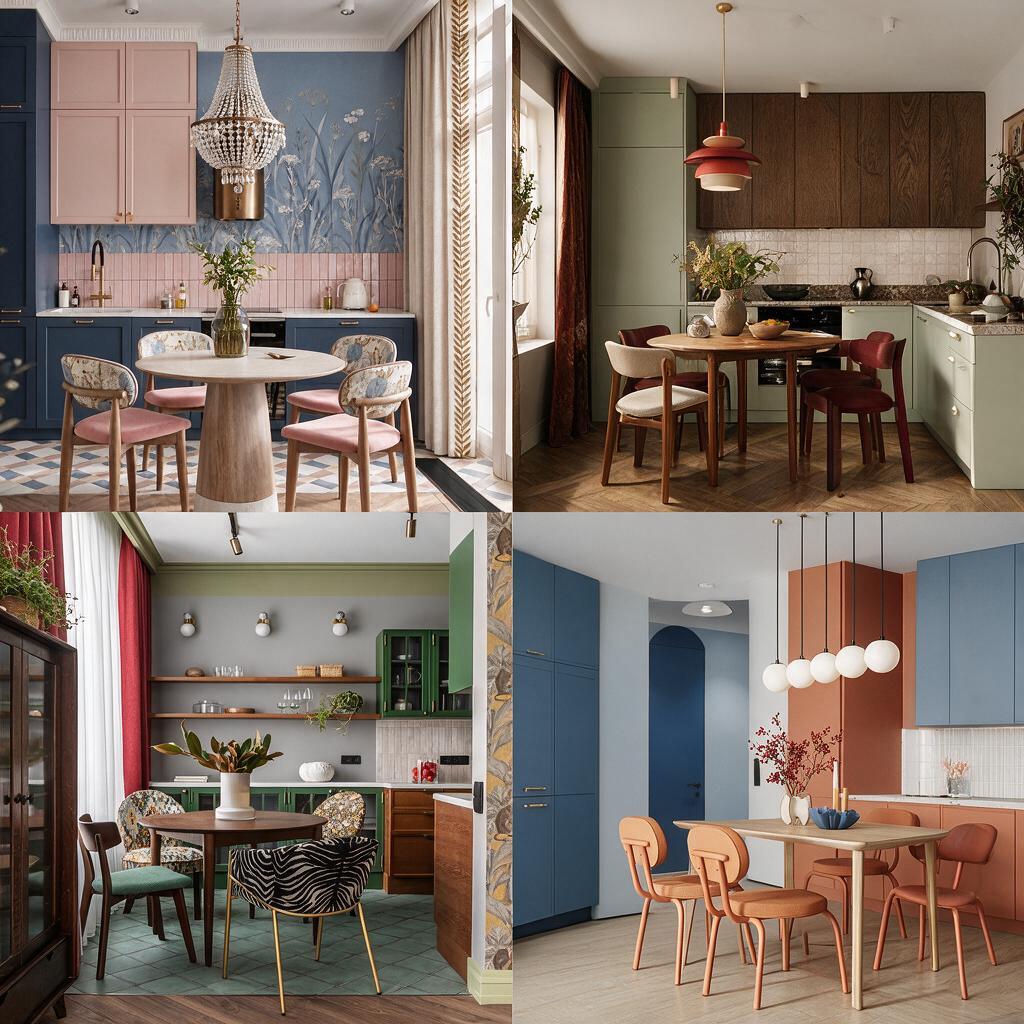

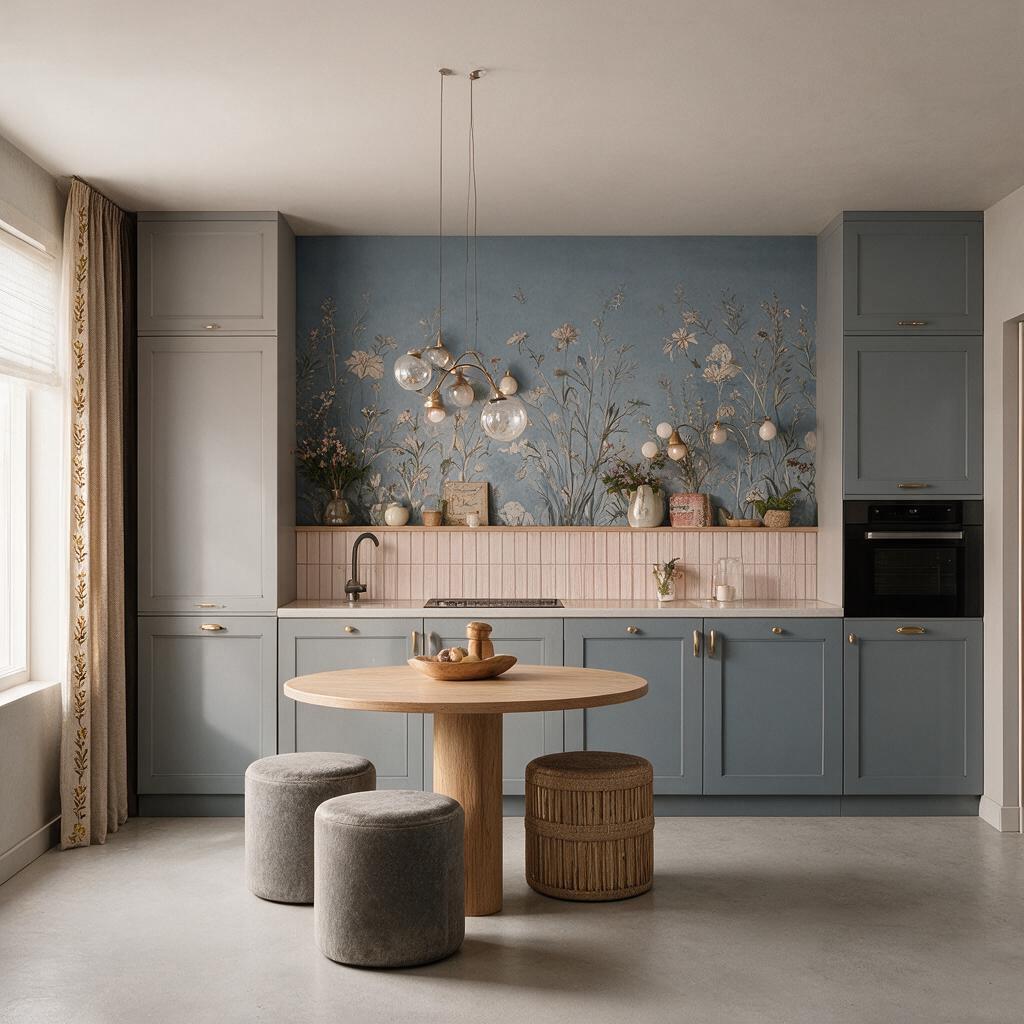
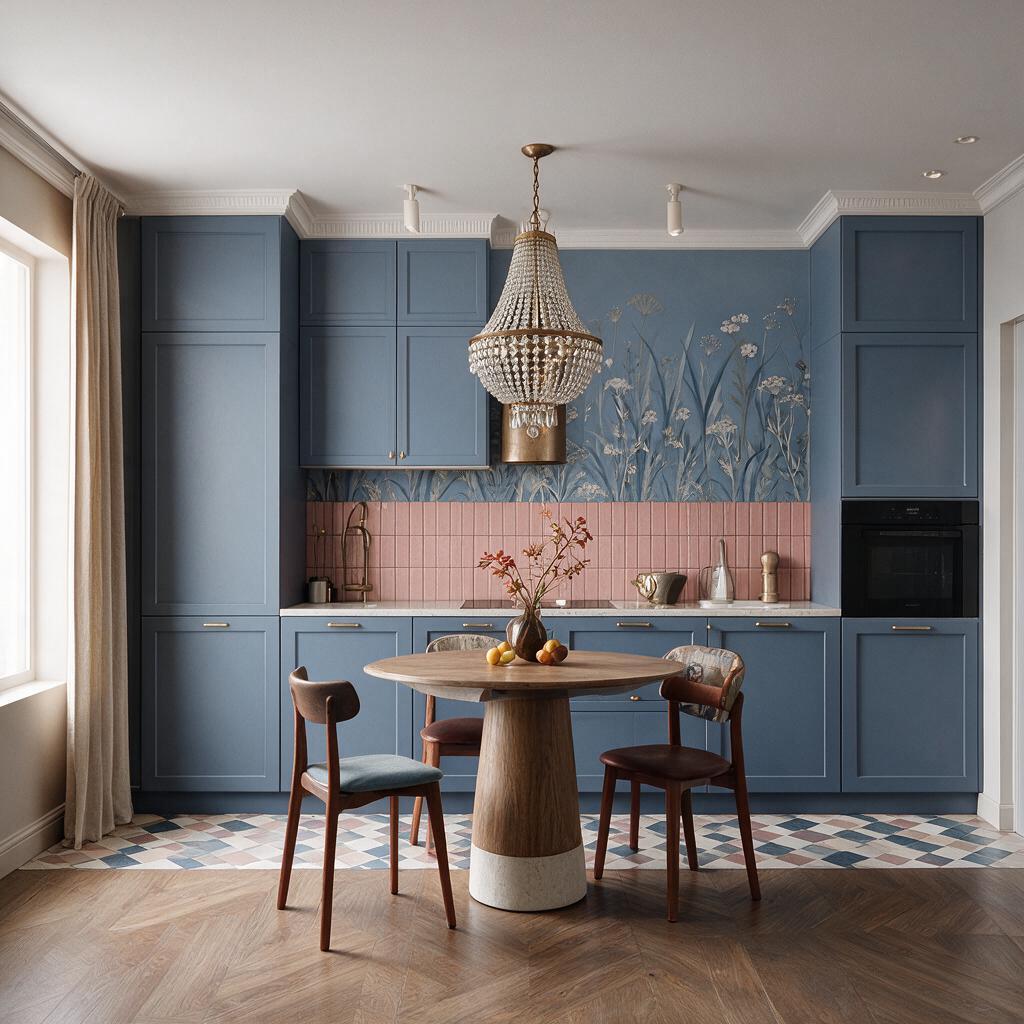
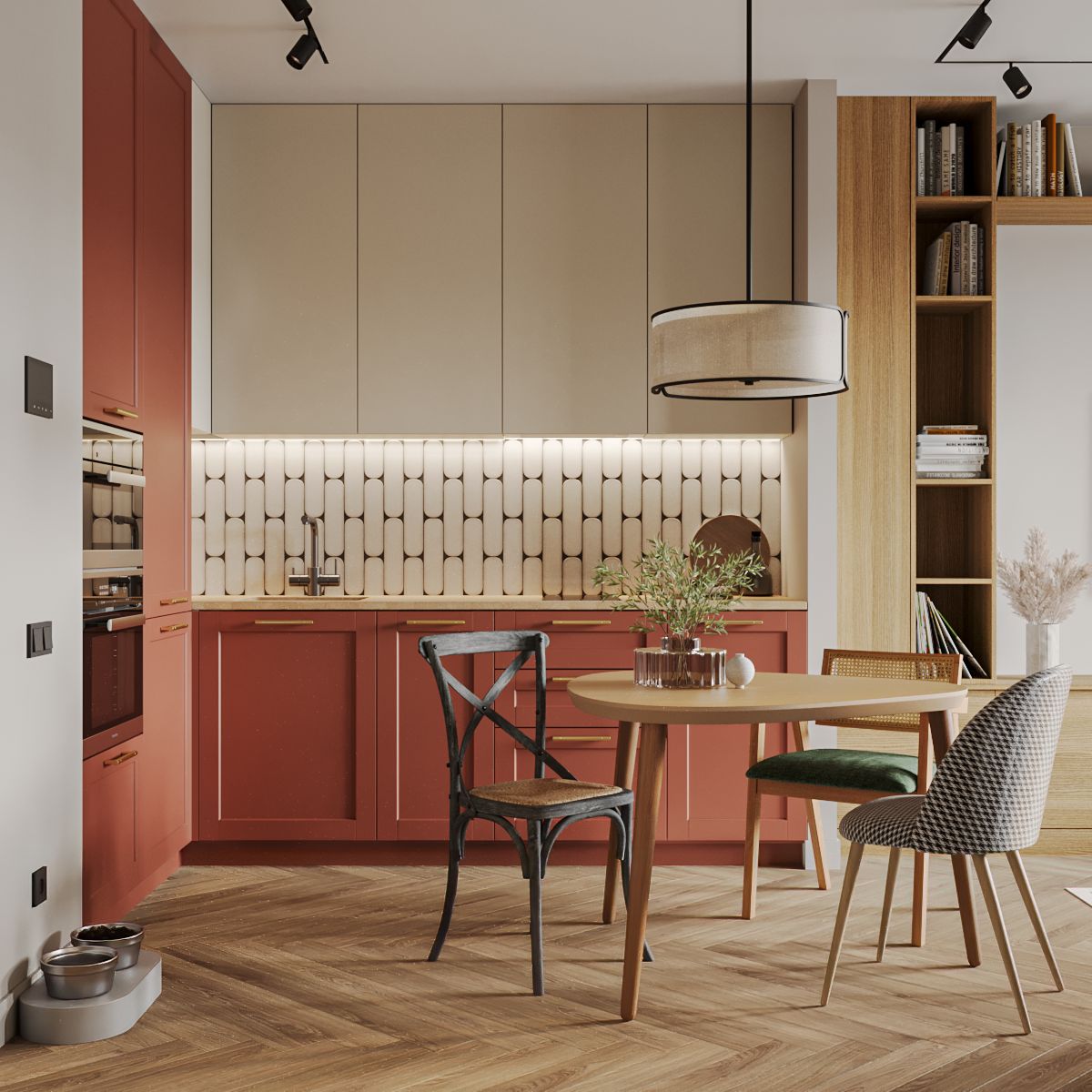
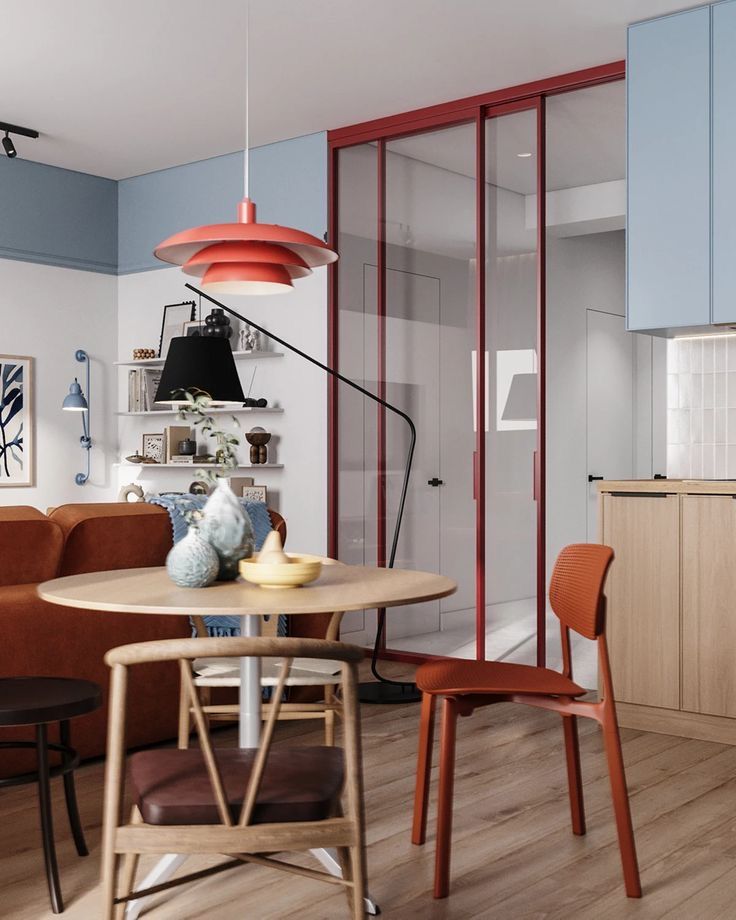







Use the provided clay render exclusively as a foundation for the architectural geometry. Maintain the layout, room proportions, camera angle, perspective, ceiling design, walls, windows, doors, built-in furniture volumes, and all other architectural elements exactly as they are. Do not alter the floor plan or the geometry of the space; however, you may change the shapes of soft furnishings and smaller pieces of furniture. Use the mood board solely as a source of inspiration for your design decisions. Develop a cohesive interior concept, color palette, material and texture selection, furniture style, lighting schemes, and decorative elements based on it—defining the overall atmosphere and stylistic direction. Synthesize these references into a unified, professionally executed interior rather than simply copying individual images. Divide the frame into four sections and create four distinct design concepts, drawing from various combinations of elements found in the mood board. Each concept should possess its own unique identity while remaining firmly within the visual style established by the mood board. Incorporate realistic materials, expressive natural textures, multi-layered lighting, and a carefully balanced color palette. Introduce subtle, natural imperfections, authentic fabric detailing, realistic textures (wood, stone, metal, glass, and ceramic), and thoughtfully curated decor. Prepare a premium-level interior presentation featuring realistic global illumination, physically accurate materials, natural shadows, and a convincing sense of spatial depth. Preserve the original composition and architecture while completely transforming the interior’s stylistic content. The final result should resemble a professional photograph of a completed interior, rather than a 3D visualization.
Бесплатный старт · Генерация видео и картинок с ИИ за секунды