Image - 2026-09-26 04:50
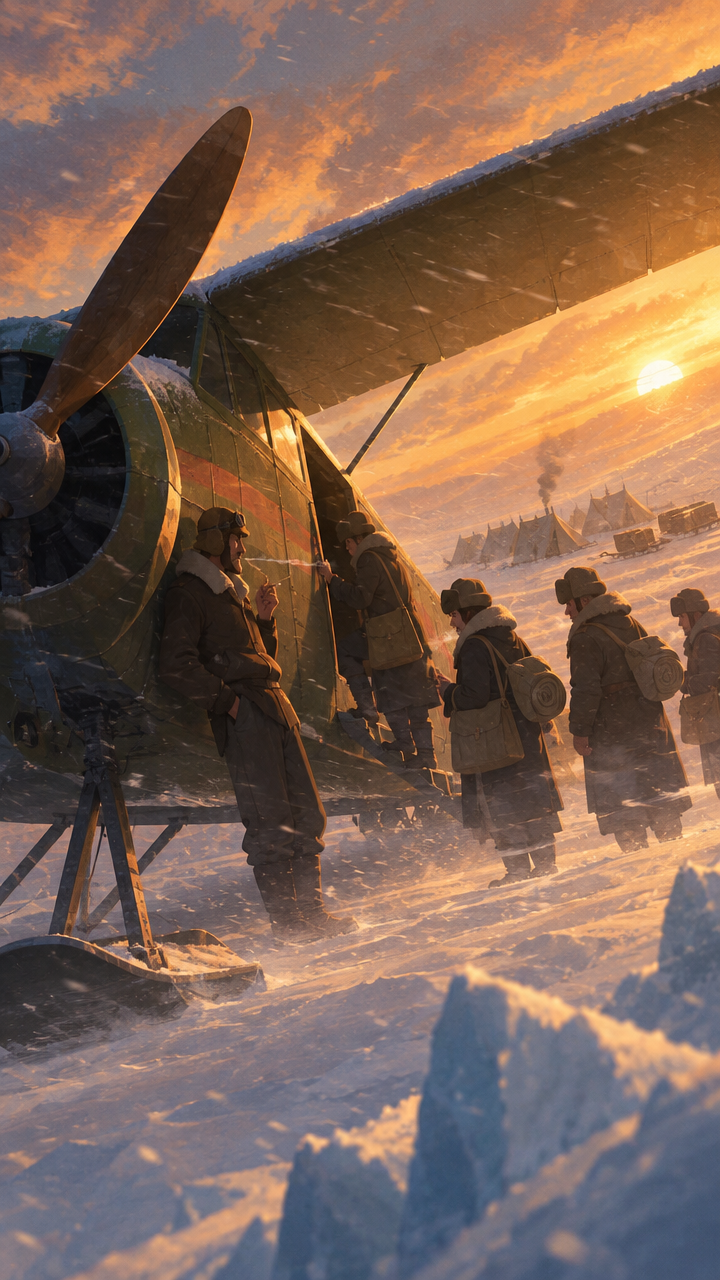
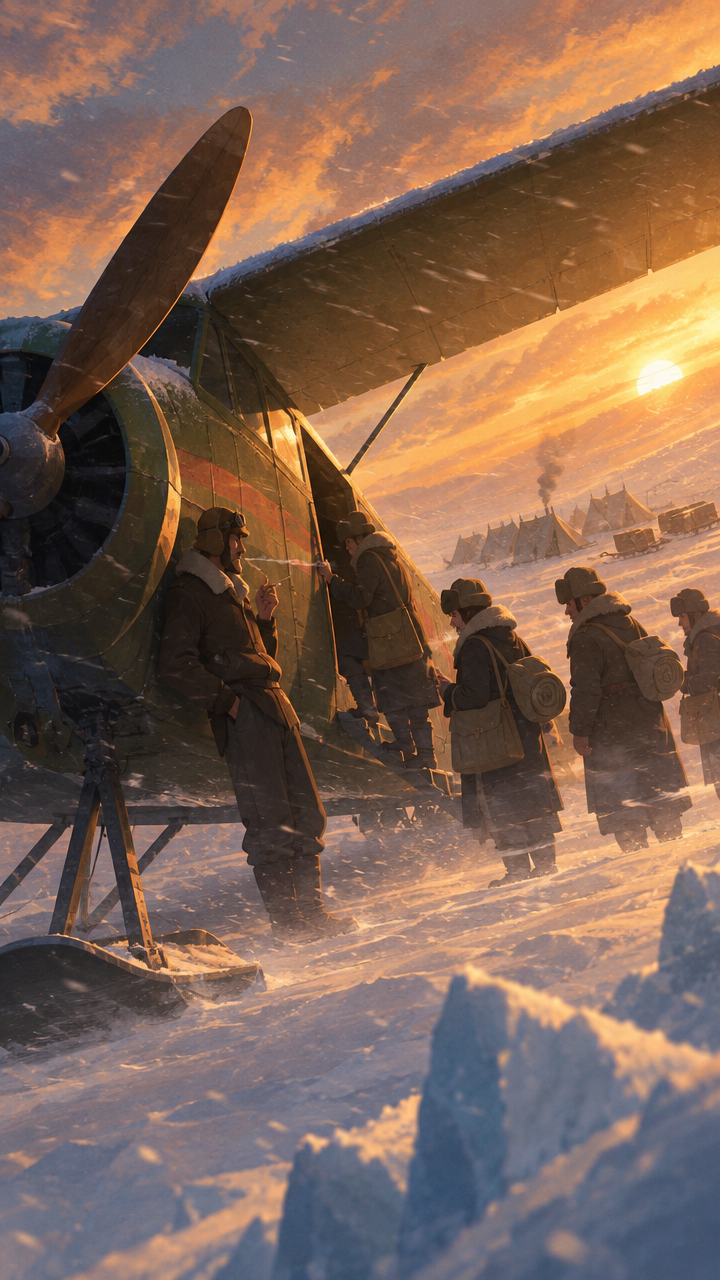
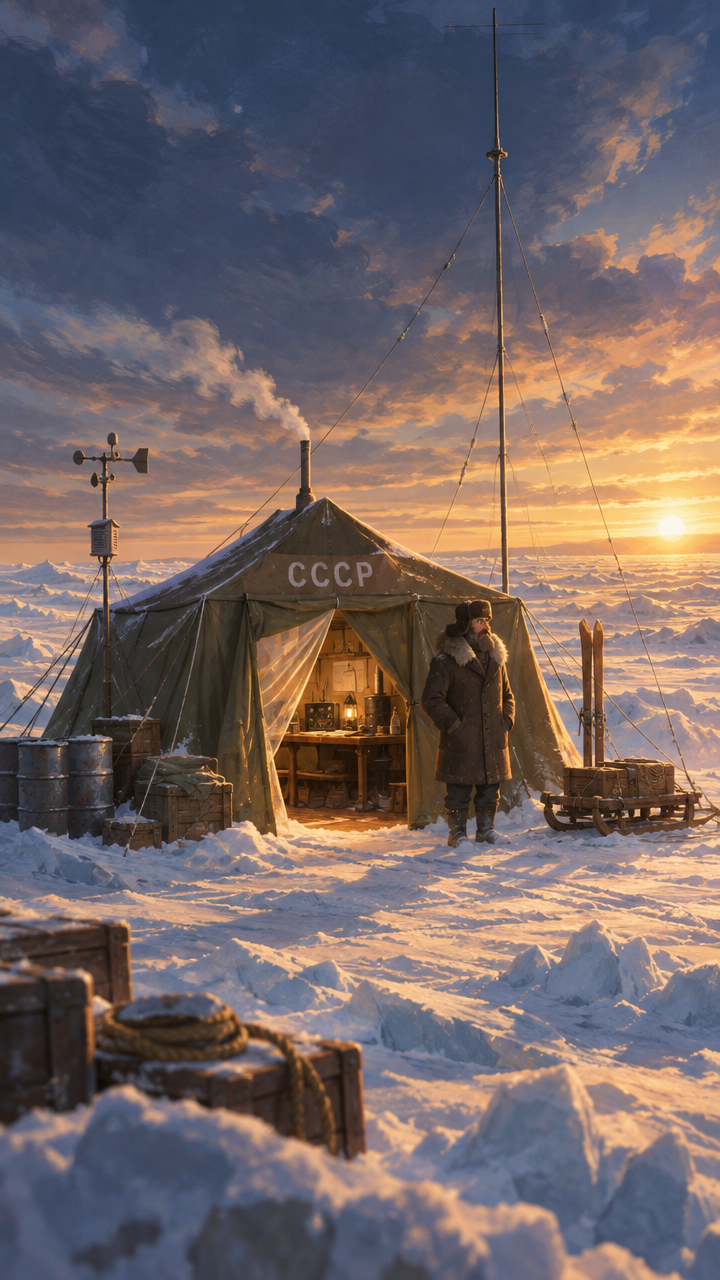
EDIT THE PROVIDED IMAGE. Use it as the strict reference for the aircraft, the characters, the camp, the ice field, the sunset sky and the overall "Klaus" 2D animation style. Rebuild only the camera angle, the pilot's position, and the atmosphere. === NEW CAMERA & COMPOSITION (DRAMATIC, 9:16 VERTICAL) === - STRONG DUTCH TILT: the entire horizon and ice field are now tilted dramatically (about 20–25 degrees), giving the shot a restless, cinematic, emotional energy. - The camera is much LOWER and CLOSER to the ground than before, positioned in the snow at eye level of the people — as if the viewer is standing right there in the middle of the scene, close to the aircraft. - The aircraft is BIG in the frame now — its nose and propeller loom close in the lower-left of the frame, angled upward toward the upper-right. The wing extends diagonally across the upper part of the frame, catching the sunset light. - The boarding queue of expedition members is placed in the MIDDLE-RIGHT of the frame, climbing one by one into the open side door — clearly readable, quiet and human. - The PILOT now stands directly BESIDE the aircraft, right at the open door — leaning one shoulder casually against the fuselage, half in shadow, watching the boarding. He is close to the plane, not separated from it. His lit cigarette is in his hand, thin trail of smoke torn sideways by the wind. - Foreground: large, jagged ice shards in the lower-right, partially out of focus, framing the shot and giving a strong sense of depth and cold. - The horizon sits high and diagonal because of the Dutch tilt, with a large expanse of dramatic sunset sky above. === THE BLIZZARD (NEW ELEMENT) === - A LIGHT BLIZZARD sweeps across the entire scene: visible horizontal streaks of drifting snow across the frame, low wisps of powder torn off the ice surface, fine flakes flying through the air, catching the sunlight like cold sparks. - The blizzard is strongest in the MIDDLE DISTANCE, blurring the far edges of the camp into a soft cold haze. - Snow drifts and eddies around the aircraft's skis, the queue of people, and the pilot's feet. - The aircraft's fabric skin, the wing surfaces and the pilot's coat flap slightly in the wind. - The distant ice field fades into the storm haze. - Light snow has settled on the aircraft's wing, fuselage top, and the pilot's shoulders. === THE PEOPLE === - Same expedition members as in the reference: heavy dark winter coats with fur collars, tall fur hats (ushanka), thick boots, some carrying canvas satchels and rolled blankets. - The queue is uneven and natural — the first one stepping into the door with a hand on the frame, the others waiting quietly, shoulders slightly hunched against the cold, breath visible. - Their expressions are quiet, tired, and faintly hopeful — the faces of people who have survived something and are finally leaving. - The PILOT: heavy leather flight jacket with fur collar, fur-lined flight cap, heavy boots. He leans against the fuselage with an easy, unreadable calm, smoking. His other hand rests in his pocket. He does NOT look at the camera — he watches the queue quietly. === PRESERVE FROM THE REFERENCE === - The same 1934 Soviet polar aircraft design: Polikarpov R-5-style sesquiplane with skis, fabric fuselage over a metal frame, two-bladed wooden propeller, olive-drab paint with a faded red stripe. NO insignia, NO stars, NO lettering, NO flags. - The same camp in the background: canvas Arctic tents, crates, sledges, barrels, a thin plume of smoke from a dying campfire. - The same endless Arctic ice field with pressure ridges and drifts. - The same golden hour sunset with warm amber light and painterly clouds. - NO shipwreck anywhere. === LIGHTING & MOOD === - LATE AFTERNOON golden hour: low sun near the horizon, casting long amber light diagonally across the ice and the aircraft, backlighting the drifting snow and the thin cigarette smoke. - Cool slate-blue shadows in the ice ridges and the aircraft's shaded side. - Visible warm sun rays streaming through the storm haze, soft lens flare and halation at the edges of the frame. - Mood: dramatic, emotional, cinematic, quiet. The end of an ordeal. A small group leaving the ice in a storm, under a burning sky. === ART STYLE — "KLAUS" (2019) 2D ANIMATION AESTHETIC === - 2D hand-drawn animation. Flat painted shapes with visible brushwork. NOT 3D, NOT photorealistic, NOT anime. - Volumetric cinematic lighting on 2D forms: warm directional light, visible light shafts, gentle atmospheric haze. - Warm limited palette: amber, honey-gold, terracotta, muted browns, dusty teal and slate-blue shadows. Slightly desaturated, hand-mixed. - Soft gentle edges — no harsh outlines. Shapes blend into the background with airbrushed transitions. - Storybook illustration quality, nostalgic and cinematic, slightly stylized proportions. - Depth through atmospheric perspective and light falloff, not depth-of-field blur. - Subtle canvas texture and fine grain across the whole image. - Do NOT copy actual characters from the film — only its rendering technique. === STRICT CONSTRAINTS === - STRICTLY 9:16 VERTICAL aspect ratio. - STRONG DUTCH TILT — dramatic, non-standard composition. - ONE aircraft only. - PILOT stands DIRECTLY BESIDE the aircraft, leaning on it, close to the open door. - Queue of 3–4 boarding members clearly visible. - Total visible people: 5–6 at most. NOT a crowd. - LIGHT BLIZZARD clearly visible: horizontal snow streaks, drifting wisps, snow dust in the air, snow settled on the aircraft. - NO runway, NO cleared strip, NO markers, NO stakes, NO flags in the snow. - NO shipwreck anywhere. - NO insignia, NO stars, NO lettering anywhere on the aircraft. - NO text, NO watermarks, NO logos, NO signatures. - NO strange objects, NO unnatural overlaps, NO floating elements. - Physically believable anatomy, lighting, motion and snow physics for all elements.
Бесплатный старт · Генерация видео и картинок с ИИ за секунды
More from this creator


More Gpt Image 2.5 images
См. все →