Image - 2026-09-18 12:16
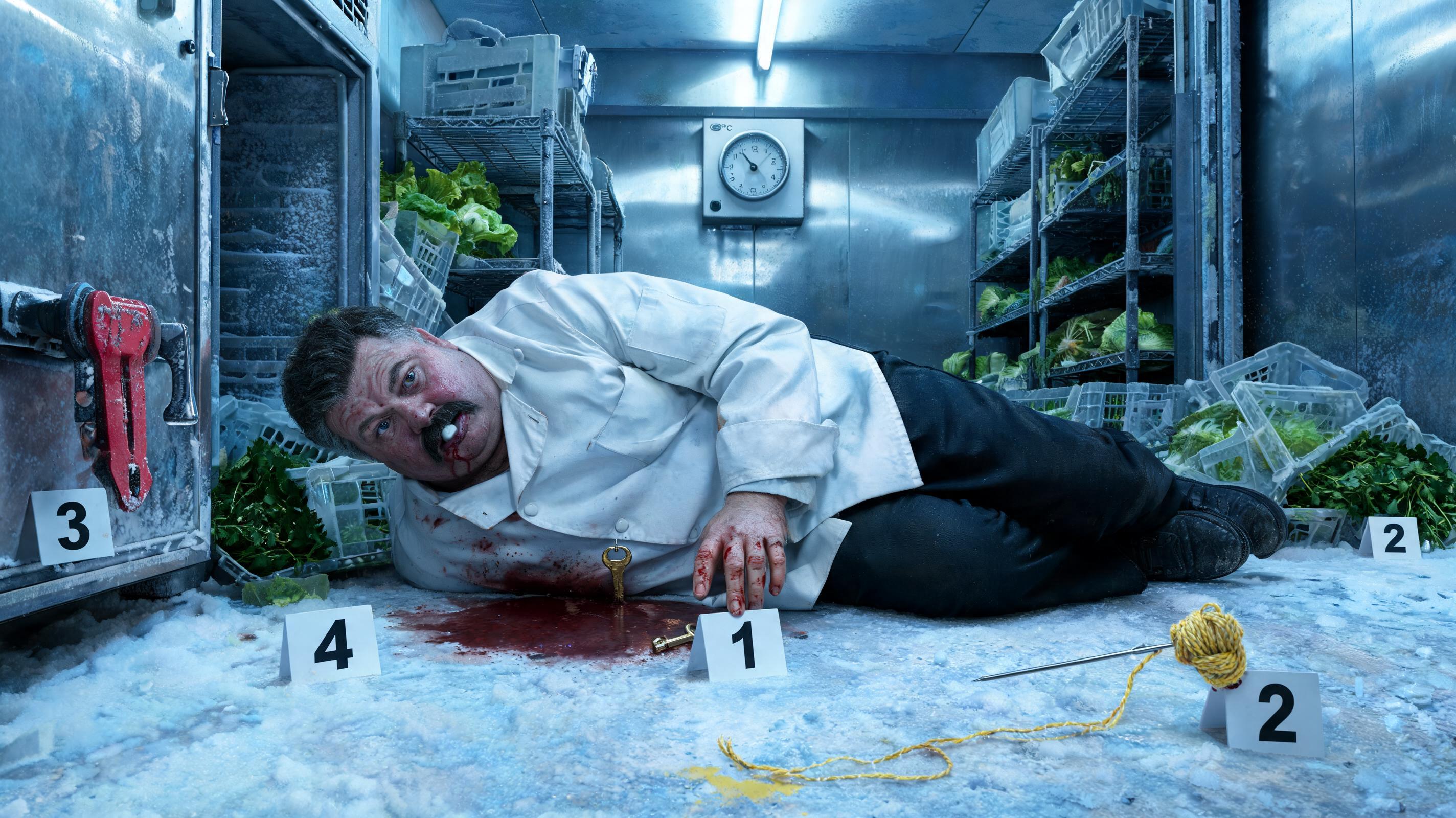
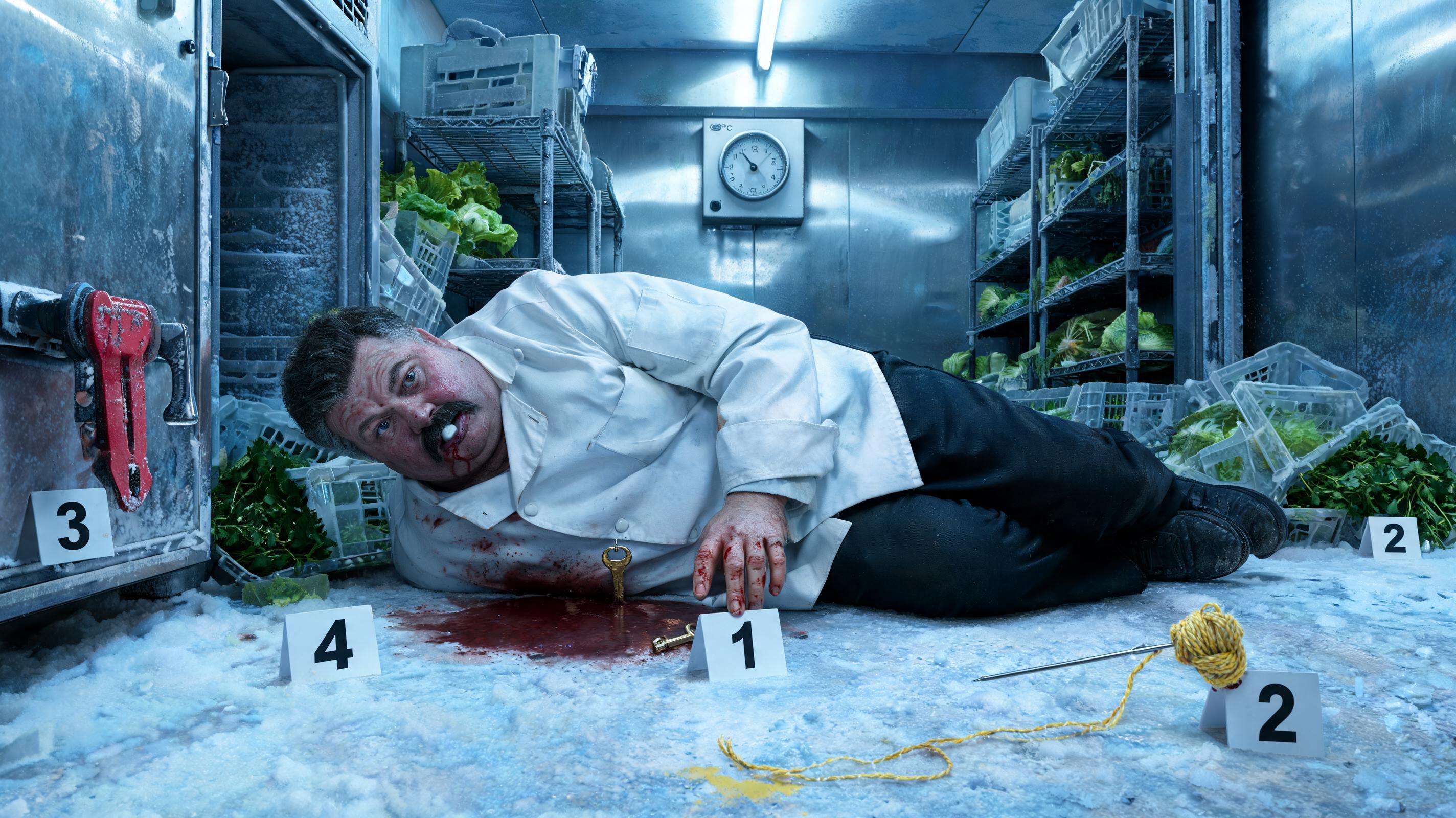
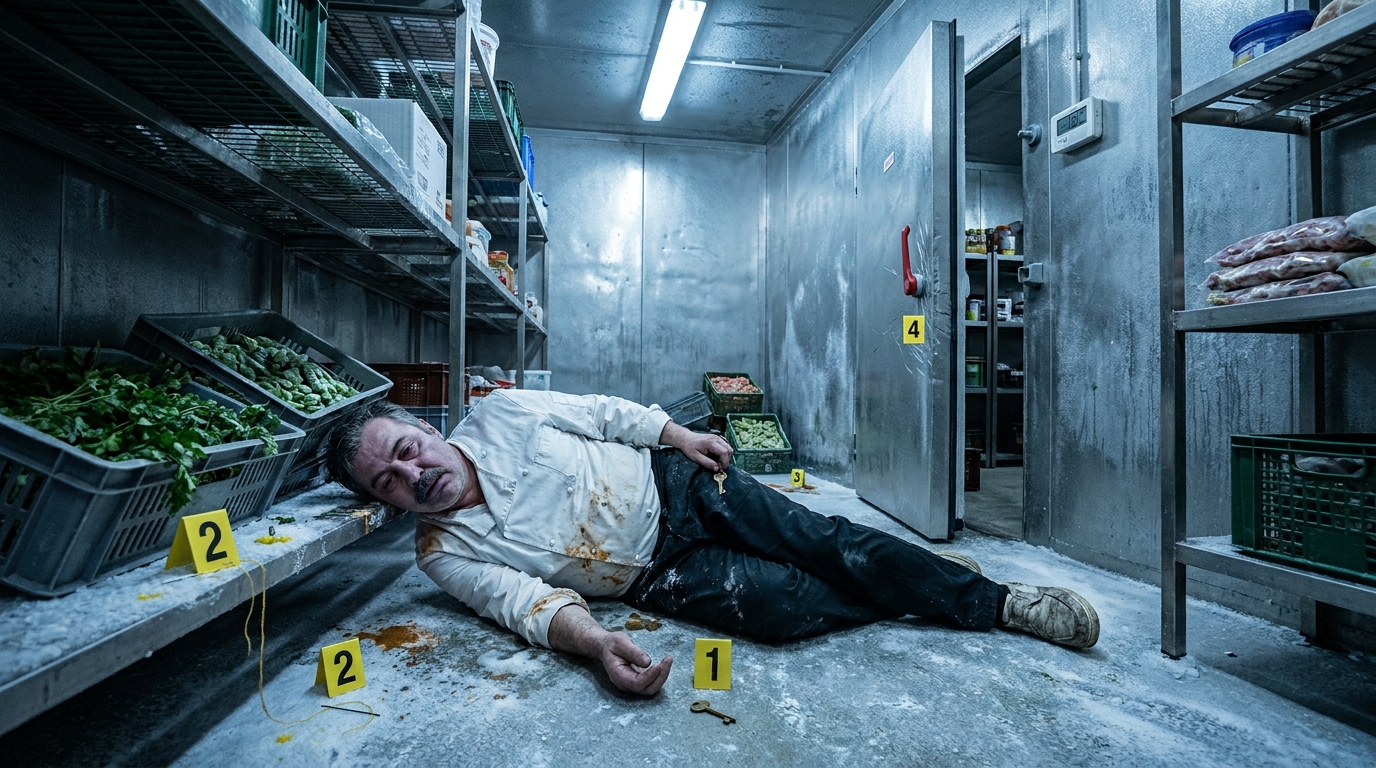
Hyperrealistic cinematic forensic crime-scene photograph, wide horizontal composition, inside a large industrial walk-in freezer of an old roadside restaurant. Cold stainless-steel walls, thick open freezer door, narrow metal storage racks, overturned plastic crates with herbs and vegetables, frosted floor, dim harsh blue-white fluorescent lighting, quiet and tragic documentary atmosphere, realistic police evidence photography. In the foreground lies the body of Victor Barinovsky, a middle-aged dark-haired male restaurant owner and chef, approximately 50 years old, slightly overweight, thick dark moustache, short dark hair with a few grey strands. He wears a rumpled white chef’s jacket, dark chef trousers and worn kitchen shoes. The jacket is partly opened at the throat as if he struggled to breathe. Victor lies collapsed on his side near a low metal storage shelf, not directly beside the door. His facial expression and posture show panic and respiratory distress. Show non-graphic forensic signs of fatal anaphylactic shock and asphyxia: visibly swollen face and throat, bluish-purple lips, pale mottled skin, subtle foam at the corner of his mouth, tense curled fingers, and small realistic traces of vomit mixed with thick dark reddish-brown restaurant sauce on the floor and on the front of his chef jacket. There are clear smears of the same sauce on his fingertips and beneath his nails, suggesting he recently tasted food. His right arm is extended toward his own jacket pocket in a clear desperate reaching gesture. One hand is positioned very close to a small old-fashioned brass spare key that is half-protruding from the lower pocket of his chef jacket. The hand should look as though he was trying to pull out the key before losing consciousness. The brass key must be sharply visible and visually important, with a small forensic evidence marker beside it. Near the body, partly concealed beneath an overturned crate of herbs, place a small, slightly bent, dirty silver sewing needle. The needle must look deliberately planted but carelessly handled: it has visible fingerprints, faint grease and sweat smears, tiny dark grime caught near the eye of the needle, and a small patch of dried wax residue on its metal surface. A short bright yellow cotton thread is threaded through the needle, tied with a crude, uneven, visibly clumsy double knot. The knot is too bulky, slightly frayed, and not professionally finished. The thread must visibly look cheaply dyed rather than naturally golden: uneven yellow coloring, darker dye concentration near the knot, slightly faded sections, and faint color bleeding along the fibers. Add several tiny yellow dye stains and smeared drops on the frosted floor near the needle, as if the thread was recently dyed or handled while still shedding pigment. Place a separate forensic evidence marker beside the dirty needle and dyed thread. On the inside of the open freezer door, show deep scratch marks around an old red emergency release handle. The emergency handle is visibly bent and partially damaged, with fresh-looking metallic scrape marks near its base. In the background, show a wall-mounted mechanical freezer thermostat set at a normal industrial freezing temperature, not at an impossibly extreme level. Include realistic small forensic evidence markers near: the brass key, the dirty sewing needle and dyed yellow thread, the damaged emergency release handle, and the sauce/vomit traces. The image should look like a police documentation photograph taken immediately after the body was discovered, not a stylized horror scene. Mood: cold, restrained, tragic, investigative noir atmosphere; evidence-heavy, believable, hyperrealistic, photorealistic, high-detail textures, realistic anatomy, natural body proportions, clear readable forensic clues.
Бесплатный старт · Генерация видео и картинок с ИИ за секунды
More from this creator
More Seedream 5.0 images
См. все →